


Uninterrupted Sleep at 35,000 ft
The seat isn’t the problem. It’s everything around it.
A lightweight blackout nook that helps children stay asleep on airplanes — by reducing light, movement, and distraction.
Created by a traveling mom after 20+ international flights with our own kids. Be part of the first NapNest release!
Expected to be priced around $85.
Limited first batch. No spam — just updates as we get closer.
Meet NapNest
·
Meet NapNest ·
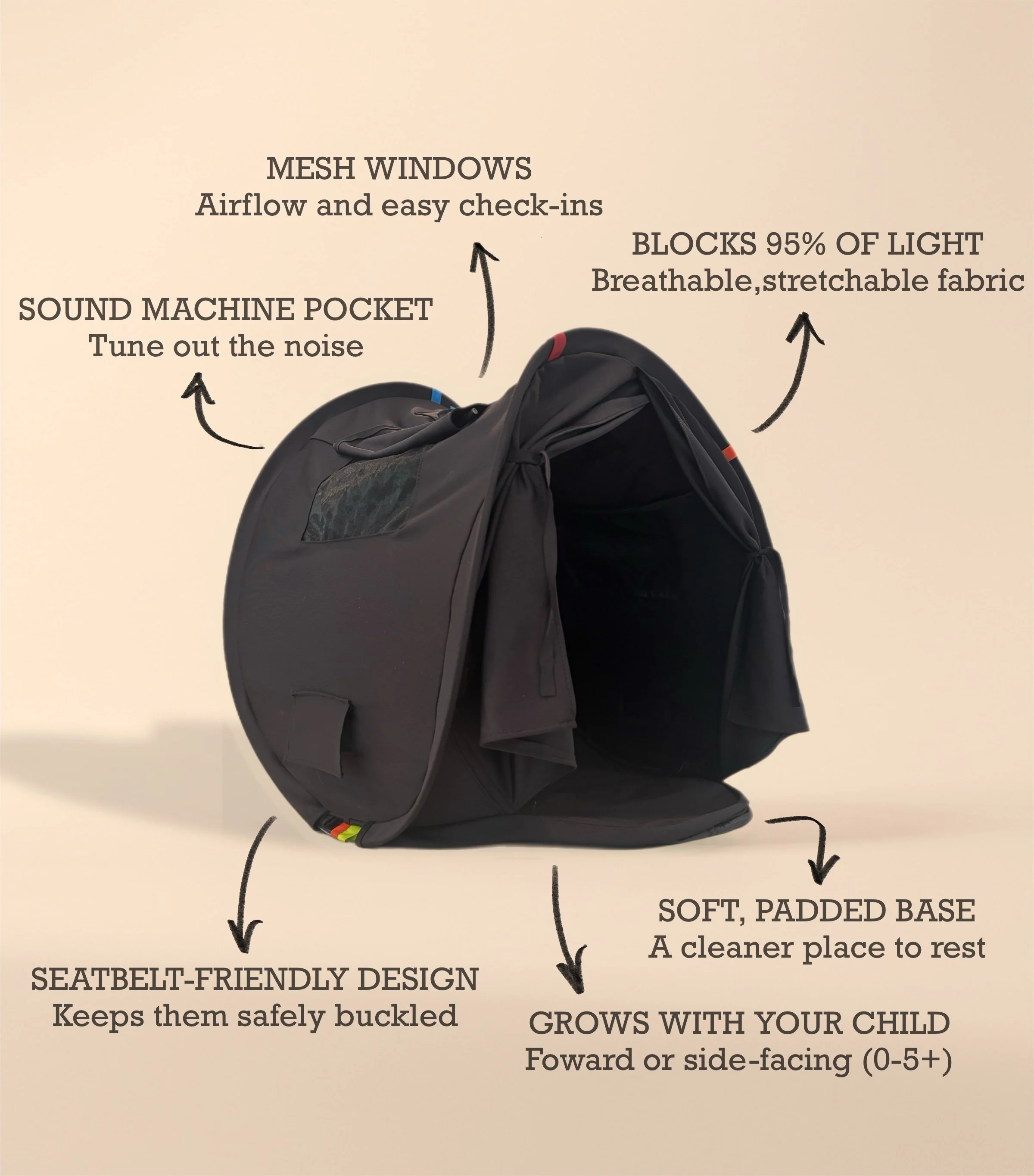
NapNest is a lightweight, patent-pending blackout nook that fits on any standard airplane seat.
It creates a darker, distraction-free space for your child, while they stay safely buckled.
It doesn’t replace your sleep routine.
It helps recreate it — and protect sleep — in a place that’s anything but routine.
THE PROBLEM ISN’T THE SEAT
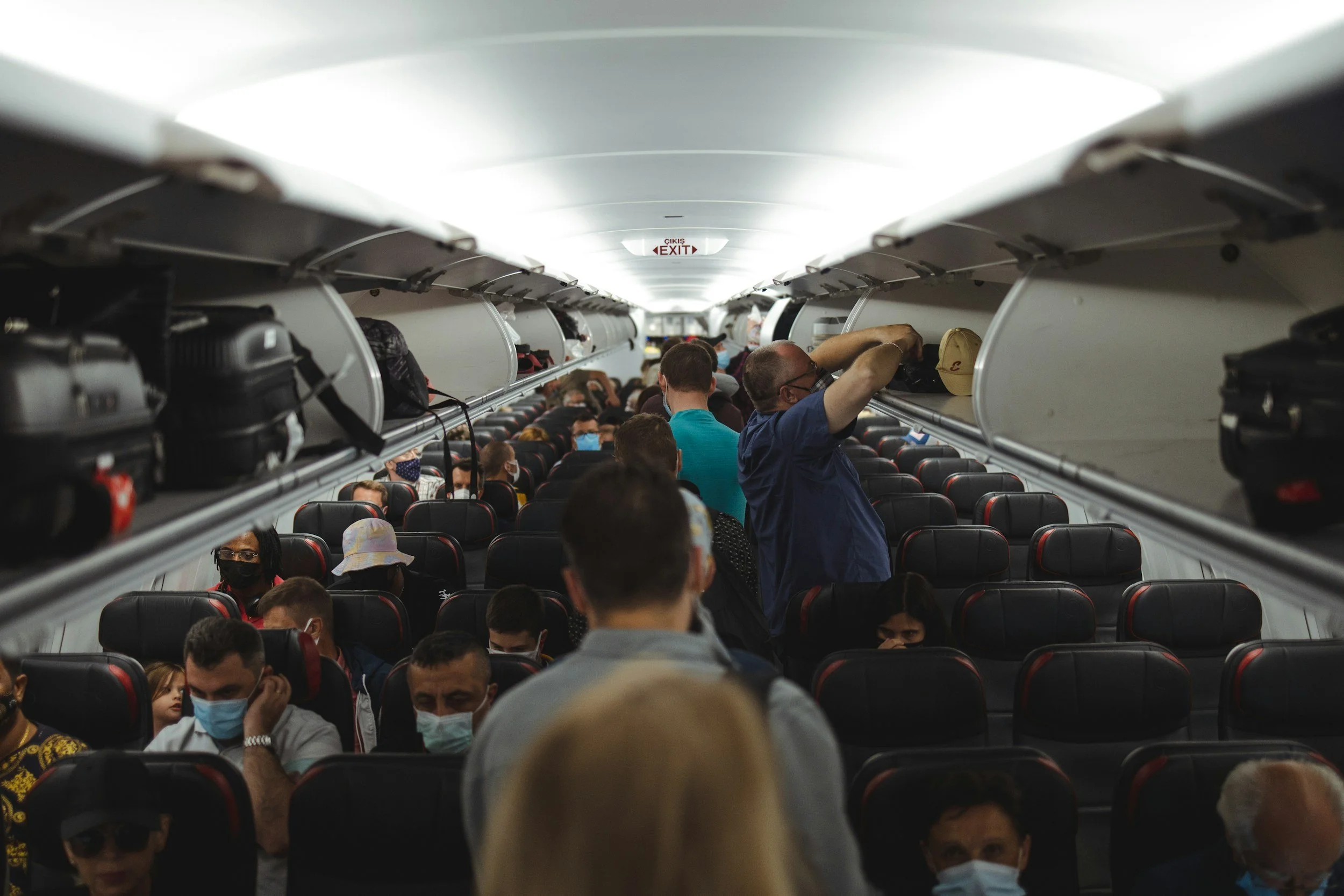
Most advice about helping young children sleep on airplanes focuses on comfort, like pillows, footrests, extendable suitcases.
But after 20+ long-haul flights, we learned something different:
It’s everything happening around them that keeps waking them up.
Planes are one of the most stimulating environments for a child to sleep in.
Cabin lights turning on.
Screens glowing.
People walking by.
Carts bumping through the aisle.
Even when they fall asleep… they don’t stay asleep.
“How do you make it dark for your kids on the plane so they don’t wake up during meal service? They refuse to wear eye masks but will only sleep when it’s dark.”
If you’ve been there too, you’re not alone. Here’s what other parents are saying:
“Anyone else have a FOMO baby/toddler? When the plane lights come on or the flight attendants come by right after my kid falls asleep, I die a little.”
“We tried everything to make it comfortable...they just can’t relax with everything happening around them and get super angry.”
“How are y’all making a little blanket fort? Mine always falls down or my kid will kick it. I had to keep fixing it the whole flight.”
“What are we using to prevent sensory (over)stimulation for sounds and lights?”
SLEEP NEEDS A SIGNAL
At home, sleep happens in a consistent environment — dim, calm, predictable.
On a plane, that couldn’t be further from reality.
What made the biggest difference for us wasn’t changing the seat.
It was reducing the stimulation around them so their bodies could stay in sleep mode.
What NapNest Is Designed To Do
-
Block Light
Shields your child from overhead lights and nearby screens.
-
Reduce Distraction
Helps limit movement and activity in their line of sight.
-
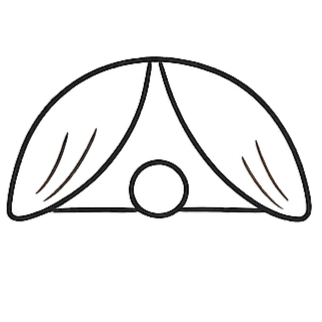
Create a Calm Space
Brings in the darkness and consistency they’re used to at home.
-

Supports Better Sleep
Helps them stay asleep longer once they’ve drifted off.
Why It Exists
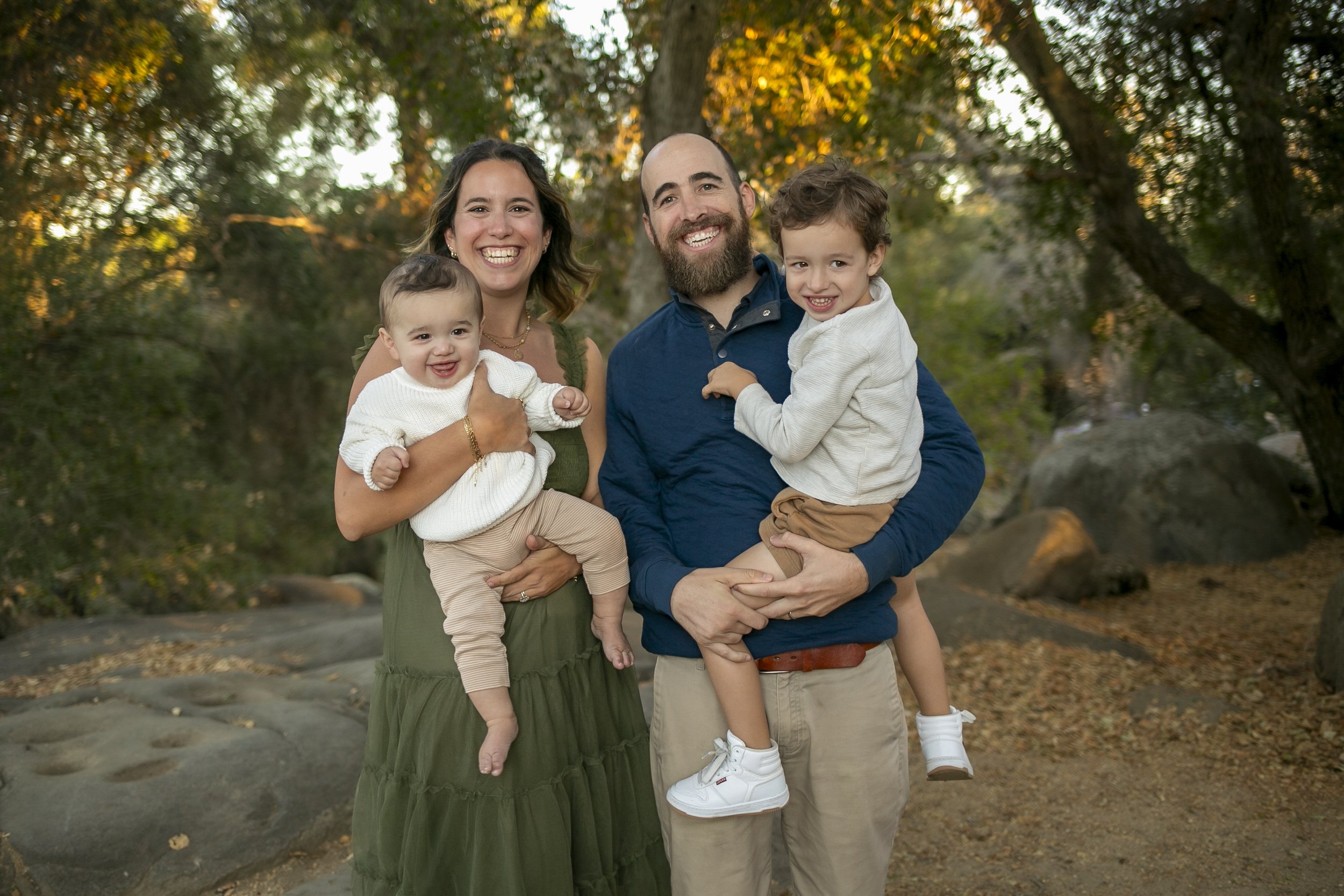
As a mom of two who’s taken 20+ long-haul flights with our kids, I always found sleep to be the most stressful part.
No matter how much we planned ahead, it always felt a bit like a gamble.
When our second was a baby, I started trying different ways to create a more consistent, low-stimulation space for him on the plane.
What I had been using before — makeshift blanket setups — never really worked. They were bulky, unstable, and would fall apart mid-flight.
So I created a simple version of something much more reliable.
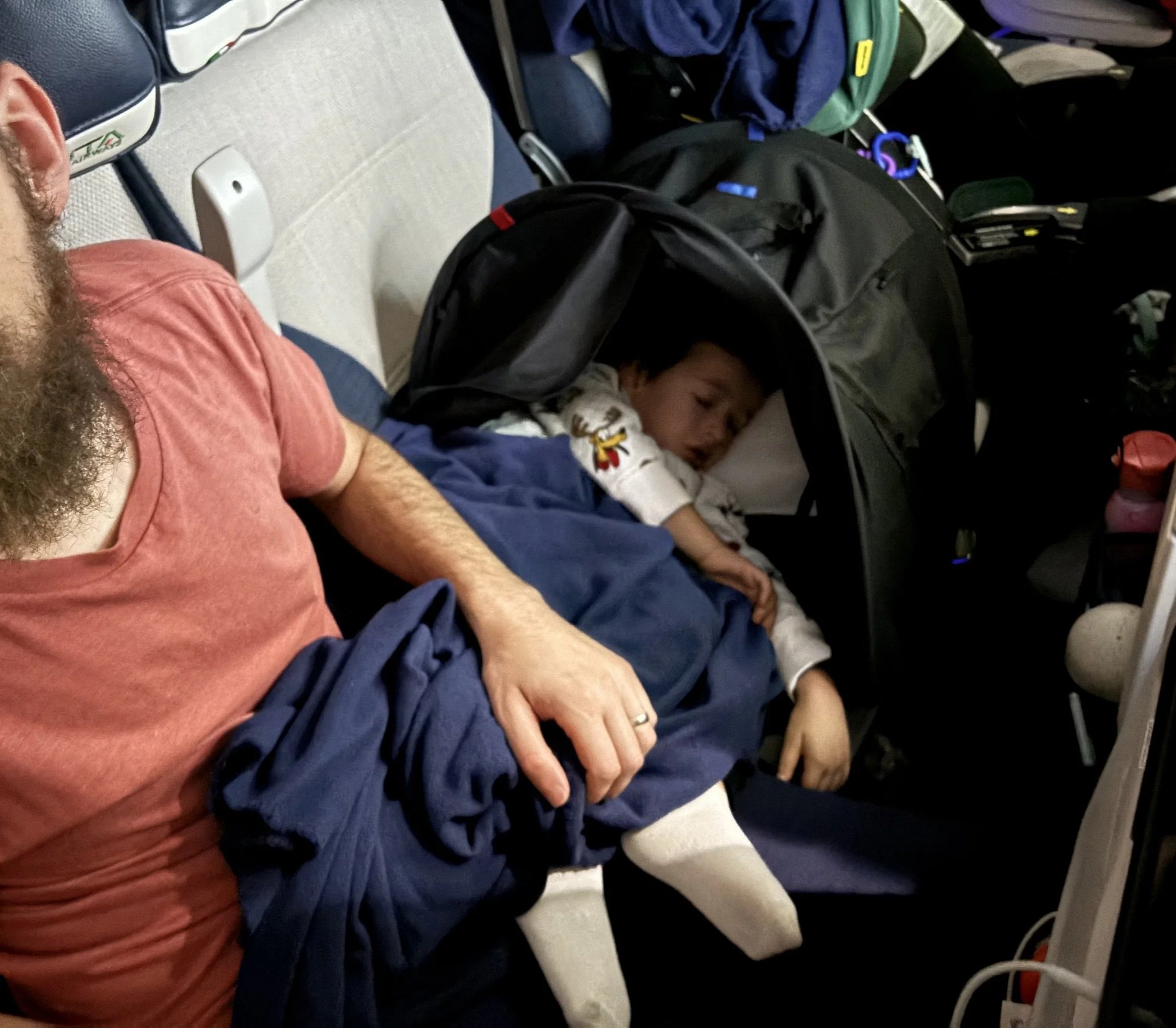
On one flight, I rocked my 10-month-old, placed him inside, and hoped it would finally work.
He fell asleep — and stayed asleep for 9 hours through meal services, people moving around us, lights turning on…all of it!
On the way back, even our 5 year old used it for a nap and fell asleep easily.
After that, I couldn’t stop thinking about how much easier that flight felt — and how many other parents were probably going through the same thing.
NapNest was a game-changer for us, and is now a patent-pending design. I want to share it to make traveling with young kids a little less stressful and a lot more enjoyable.
We’re preparing our first small production run.
Be part of the first families to get NapNest when it becomes available.
Expected to be priced around $85.
Limited first batch. No spam — just updates as we get closer.
FAQs
-
NapNest is designed for use during the cruising portion of a flight, while your child remains safely buckled in their own seat. It’s designed to sit on a single seat without attaching to it. In its side-facing setup, it doesn’t block access to the row, so it can be used on a window, middle or aisle seat.
As with any onboard item, use is subject to flight crew guidance. -
Yes — NapNest is designed to block light while still allowing airflow.
It features mesh windows and adjustable panels that help create cross-flow ventilation, along with soft, draped front curtains that allow air to move freely. -
NapNest is designed to block up to 95% of surrounding light and all movement, helping create a darker, distraction-free sleep environment on the plane.
-
NapNest is designed to grow with your child from infancy to 5+. It can be used in different orientations depending on your child’s age, size and seat setup.
All children can use it side-facing with their legs extended toward a parent, while babies and toddlers may also use it forward-facing, leveraging a seat extender. -
NapNest folds down easily into a slim zippered bag about 13 inches in diameter and roughly half an inch thick.
It’s designed to fit easily into a carry-on or even a laptop sleeve — so it won’t take up valuable space when you’re not using it.